Types of Debt Funds You Should Know About
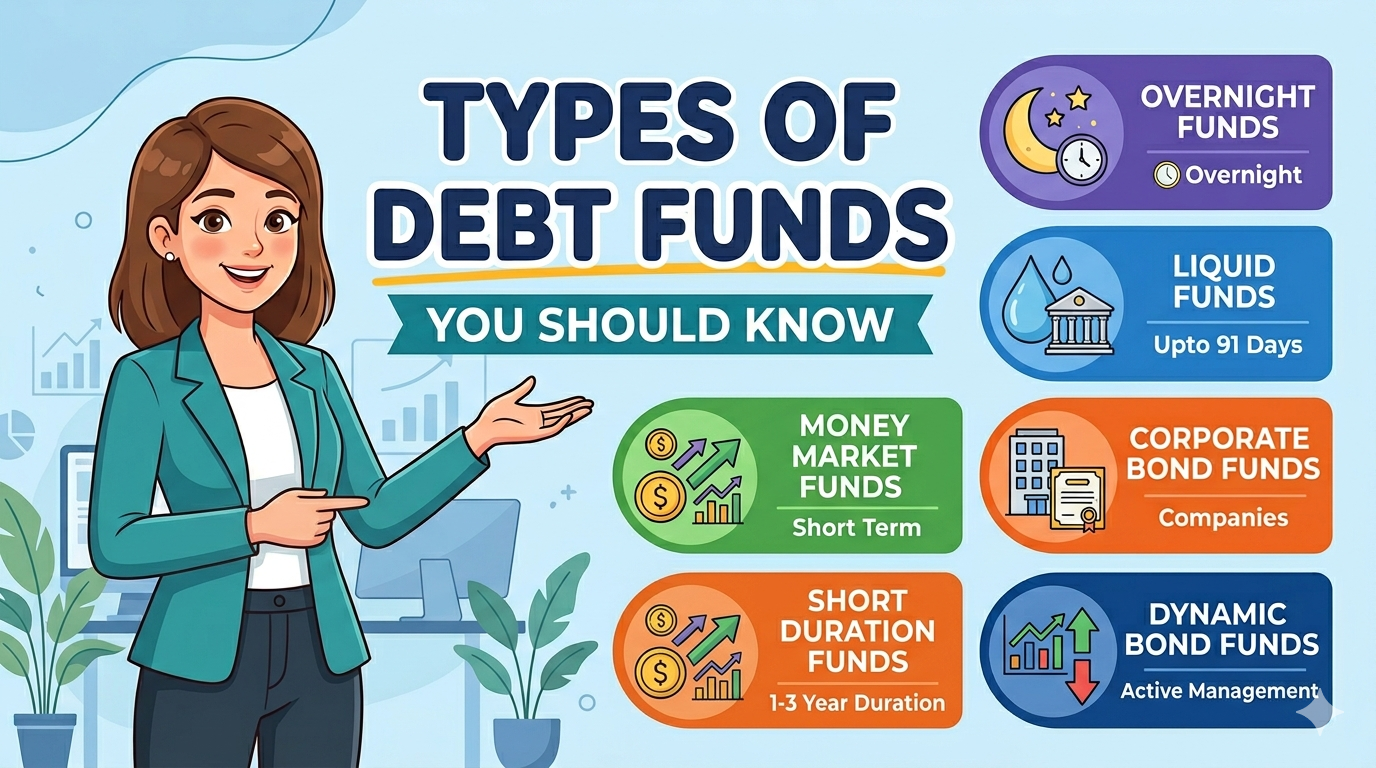
Debt funds are mutual fund schemes that invest in fixed-income securities like government bonds, corporate bonds, treasury bills, and money market instruments. They are a popular choice for investors looking for stable returns with lower risk compared to equity funds.
What Are Debt Funds?
Unlike equity mutual funds that invest in stocks, debt funds primarily invest in fixed-income instruments. The returns are generally more predictable and the risk is lower, making them suitable for conservative investors or those with short to medium-term financial goals.
Types of Debt Funds
1. Liquid Funds
Liquid funds invest in very short-term instruments with maturity up to 91 days. They are ideal for parking surplus cash and offer better returns than a savings bank account with similar liquidity.
2. Overnight Funds
These funds invest in securities with overnight maturity, making them the safest debt funds available. They are suitable for extremely short-term parking of funds.
3. Short Duration Funds
Short duration funds invest in instruments with a portfolio duration of 1 to 3 years. They offer moderate returns and are suitable for investors with a 1-2 year investment horizon.
"Debt funds are an excellent tool for building a stable, low-risk portfolio — especially for first-time investors looking to preserve capital while earning better-than-FD returns."
4. Corporate Bond Funds
These funds invest at least 80% of their corpus in the highest-rated corporate bonds (AA+ and above). They offer better returns than government securities funds with relatively low credit risk.
5. Dynamic Bond Funds
Dynamic bond funds actively manage their portfolio duration based on interest rate outlook. Fund managers shift between short and long-term bonds depending on market conditions.
Key Benefits of Debt Funds
- Lower risk compared to equity funds
- Better post-tax returns than FDs for investors in the 30% bracket
- High liquidity — most funds allow instant redemption
- Professional fund management
- Diversification across multiple issuers
Things to Consider Before Investing
While debt funds are generally safer, they do carry interest rate risk and credit risk. Always match the fund duration to your investment horizon and check the credit quality of the portfolio before investing.


